ATPL · EASA ECQB
Quiz ATPL 032 Prestazioni
Prestazioni: decollo, salita, crociera, discesa e atterraggio, con i grafici e le tabelle dei manuali, le distanze richieste e disponibili, gli effetti di peso, quota, temperatura, vento e pista. Molte domande partono da un grafico: si impara a leggerlo in fretta solo facendone tanti.
Argomenti di 032 Prestazioni
- 032-01 - General
- 032-02 - C2-23/Applicable Operational Requirements Performance Class B - Theory
- 032-03 - CS-23/Applicable Operational Requirements Performance Class B – Use of Aeroplane Performance Data for Single- and Multi-engine Aeroplanes
- 032-04 - CS-25/Applicable Operational Requirements Performance Class A – Theory
- 032-05 - CS-25/Applicable Operational Requirements Performance Class A – Use of Aeroplane Performance Data
10 domande d'esempio di 032 Prestazioni
Domande della banca dati EASA ECQB, come le trovi nei quiz gratuiti. Prova a rispondere, poi apri la soluzione.
-
For a jet aircraft, which of these statements is true regarding best range with altitude?
- Best range decreases steadily with altitude.
- Best range increases steadily with altitude.
- Best range increases up to an optimum altitude, then decreases after that.
- Best range is achieved at lower altitudes.
Mostra la risposta
Best range increases up to an optimum altitude, then decreases after that.
-
Which of the following regroups the set of conditions which lead to an increase in take-off distance?
- Downhill slope; low QNH; wet runway
- Downhill slope; high QNH; contaminated runway
- Uphill slope; low pressure altitude; contaminated runway
- Uphill slope; high pressure altitude; wet runway
Mostra la risposta
Uphill slope; high pressure altitude; wet runway
-
Refer to figure or CAP 697 file 2.2.1.
ISA + 20ºC
Given the following information, determine the fuel flow and TAS:
Pressure altitude: 2 500 ft
Manifold pressure: 25.0 In.Hg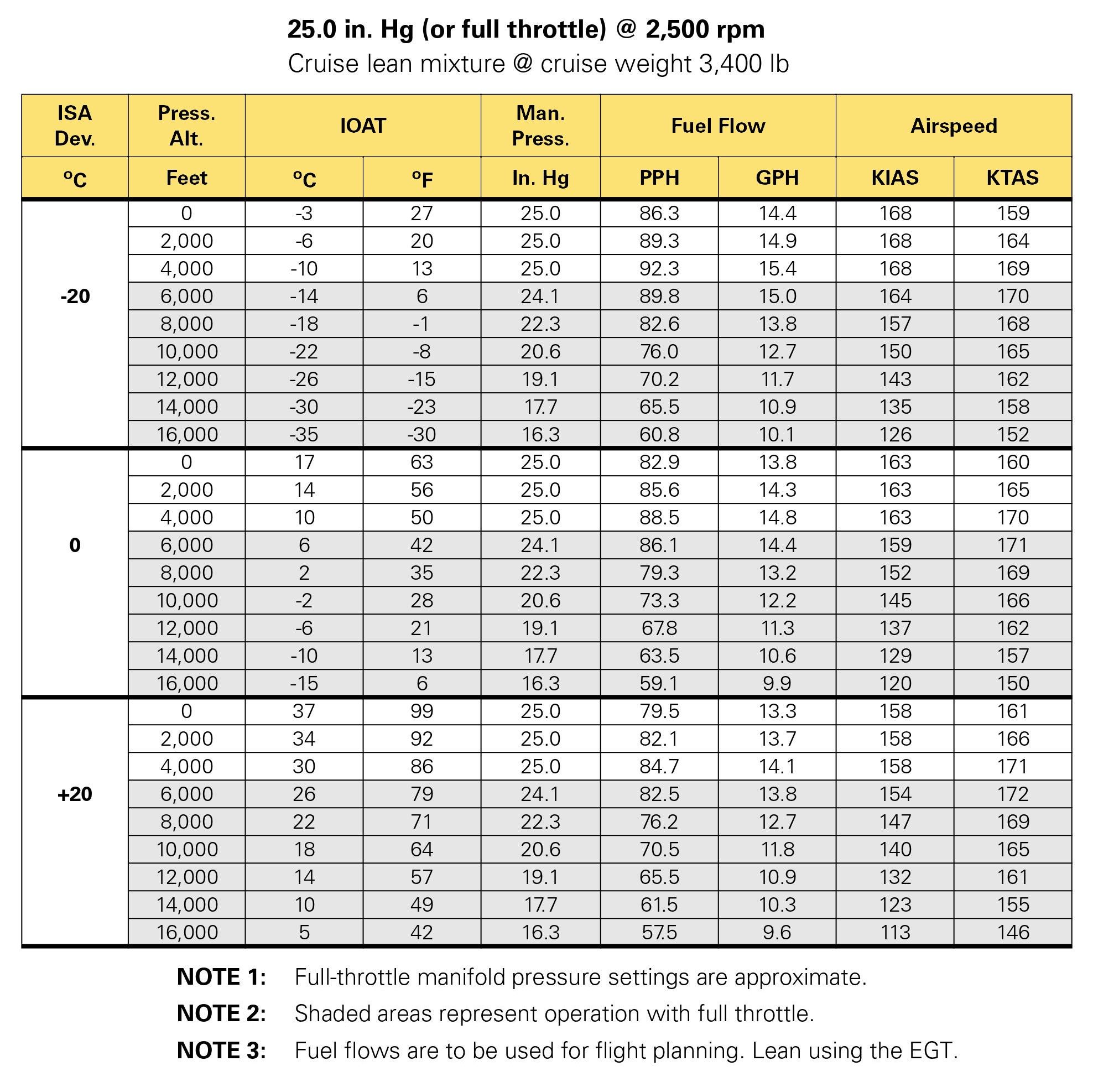
- 13.8 gallons per hour and 167 KTAS.
- 14.0 gallons per hour and 170 KTAS.
- 14.1 gallons per hour and 171 KTAS.
- 13.7 gallons per hour and 166 KTAS.
Mostra la risposta
13.8 gallons per hour and 167 KTAS.
-
Which of the following statements accurately describes the Long Range Cruise (LRC) speed, when compared to the maximum range speed?
- It is more fuel-efficient.
- It has a higher angle of attack.
- It corresponds to a higher Cost Index (CI).
- A longer flight time is required to cover a given distance.
Mostra la risposta
It corresponds to a higher Cost Index (CI).
-
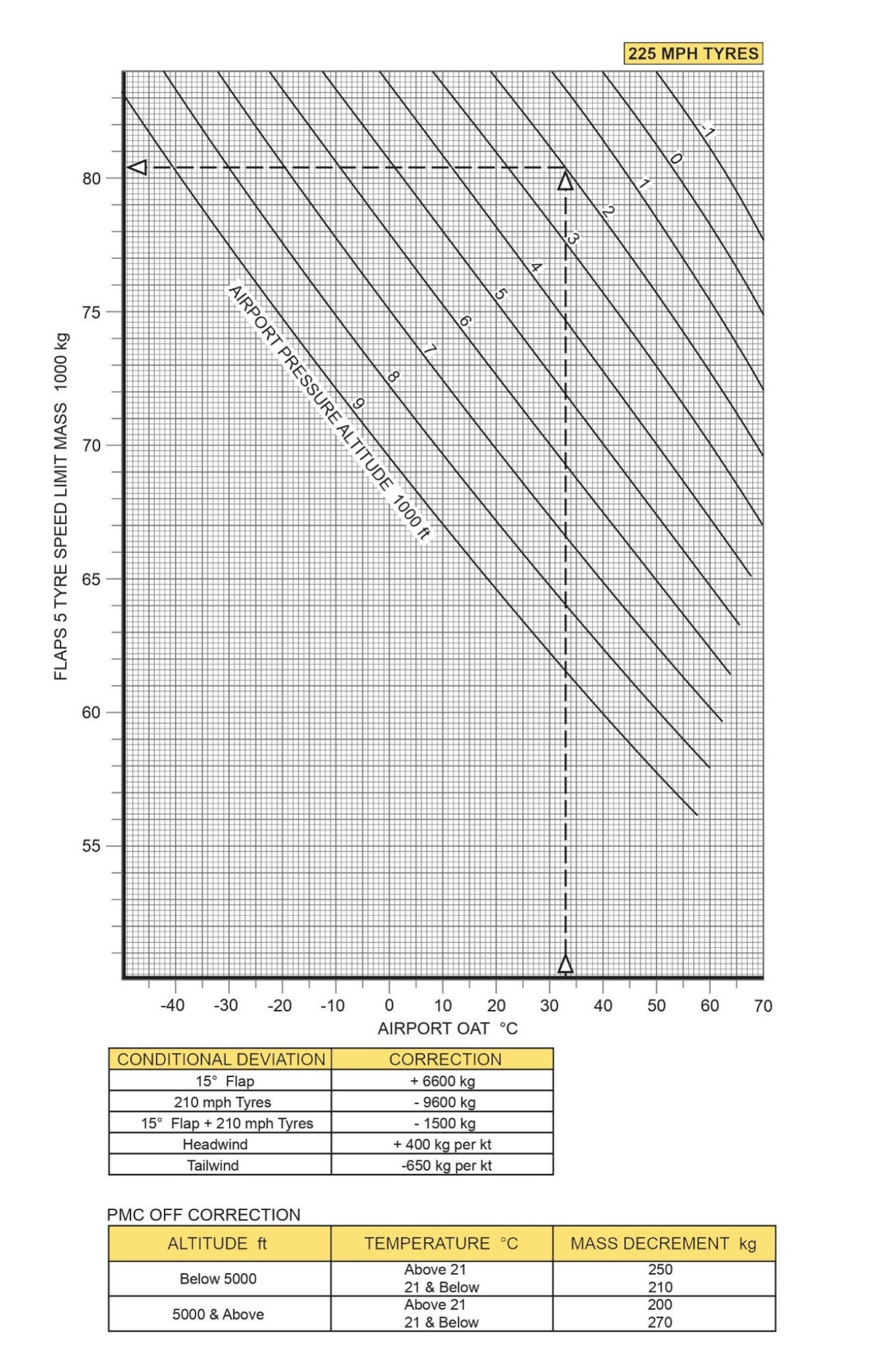
Refer to figure or CAP 698 file 4.6.
Given the following information:- Outside air temperature: 25°C
- Pressure altitude: 7 000 ft
- Tailwind component: 3 kt
- Flaps: 5°
- PMC: OFF
Find the FLAPS 5 TYRE SPEED LIMIT MASS for an aircraft which is fitted with 210 mph tyres.
- 73 050 kg
- 56 850 kg
- 57 900 kg
- 59 450 kg
Mostra la risposta
56 850 kg
-
Refer to figure.
Assuming a constant L/D ratio, which of the diagrams provided correctly shows the movement of the "Thrust Required Curve". Mass m1 is higher than mass m2.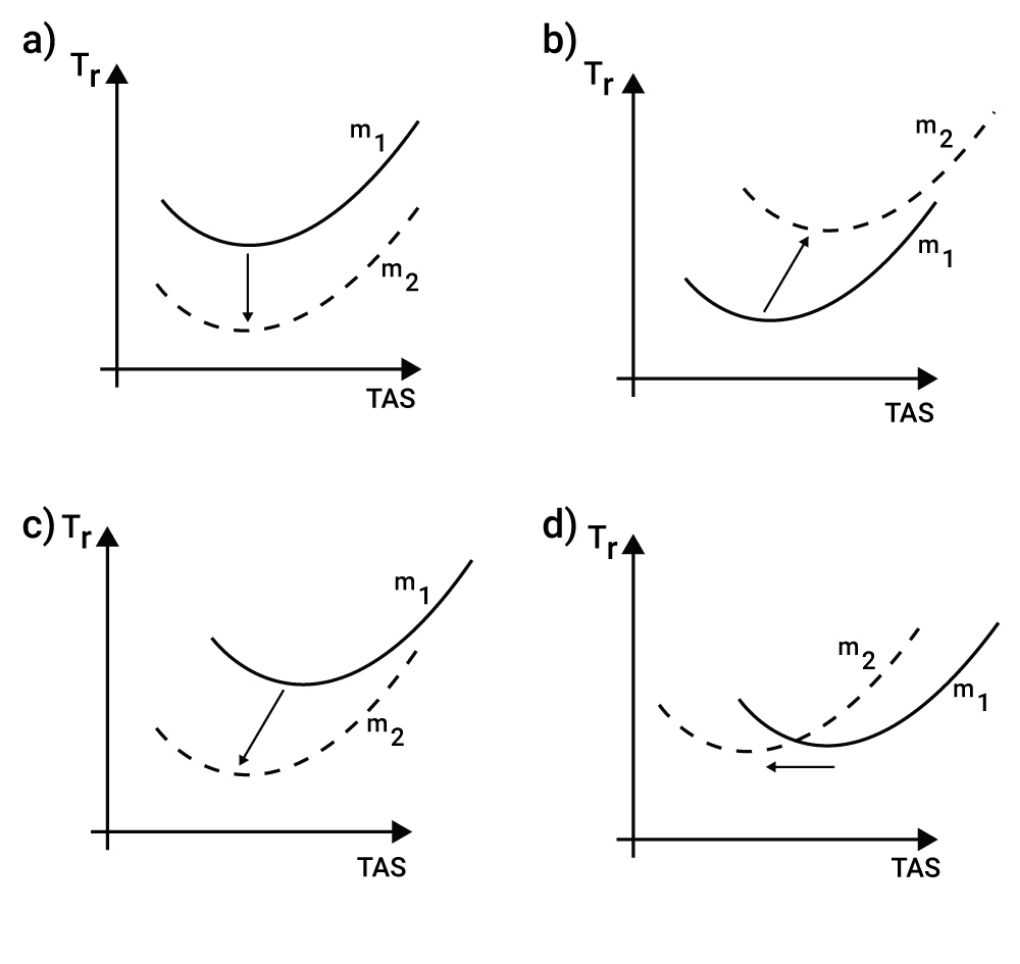
- Diagram c
- Diagram b
- Diagram a
- Diagram d
Mostra la risposta
Diagram c
-
If a Performance Class B multi-engined aeroplane experiences an engine failure after lift-off, the initial effect will be…
- rolling due to lift vector asymmetry between the wings.
- pitch-down due to the loss of elevator effectiveness.
- pitch-up due to total lift decrease.
- yawing due to thrust line asymmetry.
Mostra la risposta
yawing due to thrust line asymmetry.
-
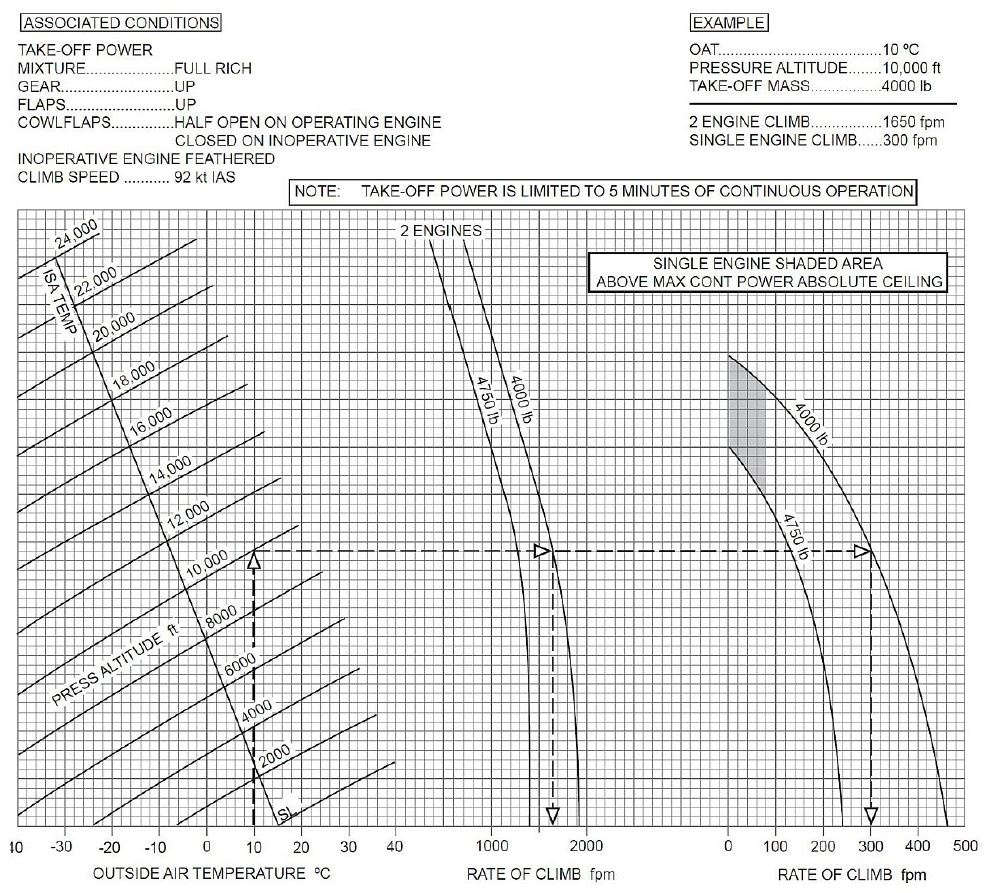
Please refer to the annex or to CAP 698 Figure 3.6. Given the following information, determine the all-engine still-air gradient. Take-Off Mass: 4000 lb Airport elevation: 5000 ft OAT: ISA Headwind: 10 kt Climb speed: 92 kt IAS, 99 kt TAS Flaps: Up Gear: Up Power: Take-off
- 14%
- 4%
- 21%
- 19%
Mostra la risposta
19%
-
What is the effect of a tailwind on the descent angle and flight path angle?
- Descent angle increases, flight path angle increases.
- Descent angle remains constant, flight path angle increases.
- Descent angle decreases, flight path angle decreases.
- Descent angle remains constant, flight path angle decreases.
Mostra la risposta
Descent angle remains constant, flight path angle decreases.
-
Please refer to the annex or to CAP 698 Figure 4.29. Given the following information, what is the Climb-Limited Landing Mass?
- OAT +10° C
- Pressure Altitude 2000 ft
- Flap Position 30°
- A/C Packs AUTO
- ENGINE & WING Anti-ice ON
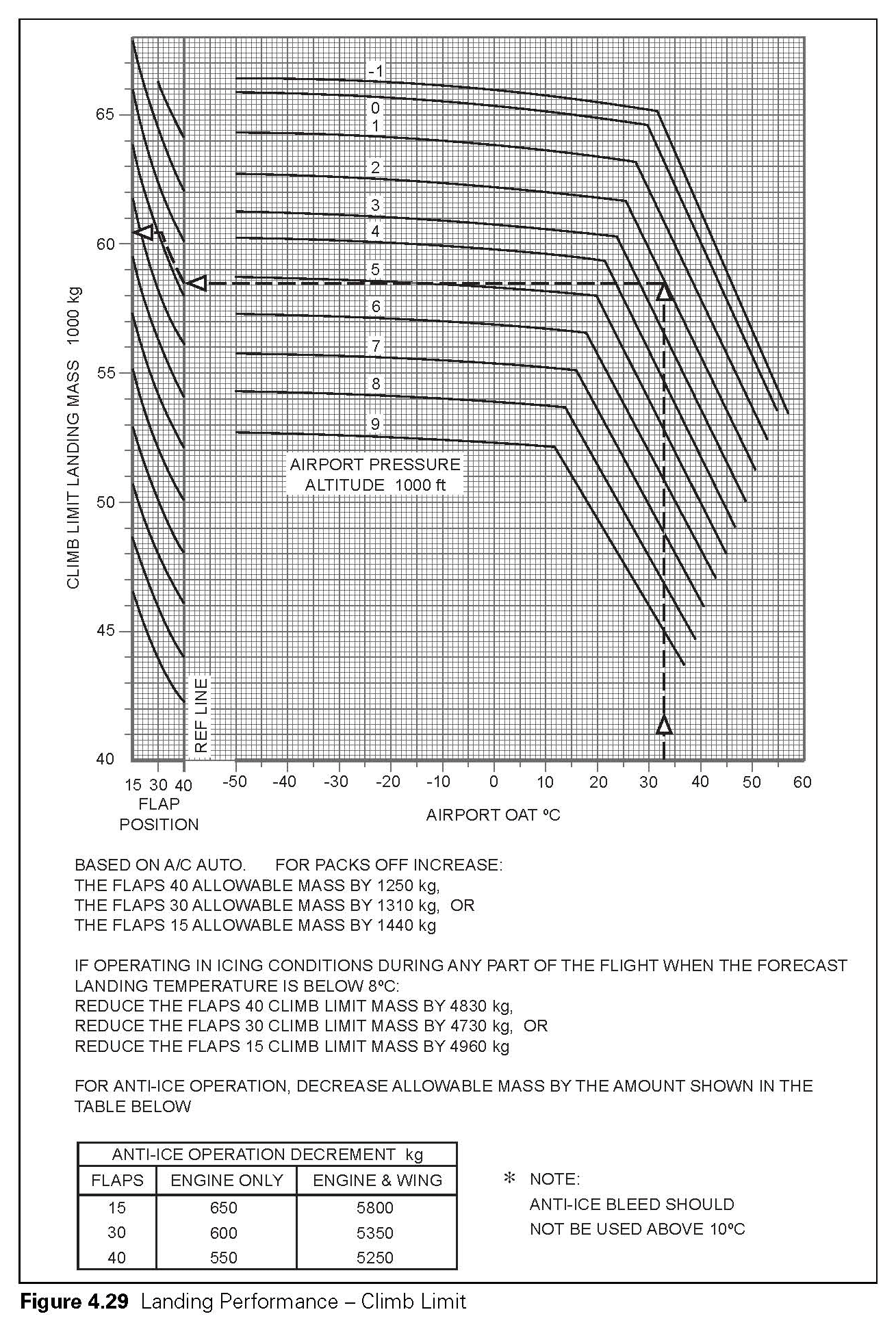
- 54 380 kg
- 64 400 kg
- 69 750 kg
- 59 050 kg
Mostra la risposta
59 050 kg
Come ti prepari con QuizAviation
Studio
Scegli materia e argomenti, rispondi e vedi subito la risposta giusta con la spiegazione.
Simulazione d'esame
Lo stesso numero di domande e lo stesso tempo dell'esame vero, con il risultato alla consegna.
Ripasso degli errori
Le domande sbagliate e quelle segnate tornano in un quiz dedicato, finché non le sai.
Report e progressi
Percentuale per materia, andamento nel tempo e report in PDF da portare in scuola.